.svg)
For at least a few months every year, many Calgary families rely on their air conditioning system to maintain comfort levels in the home.
Around 32% to 35% of Calgary homes now have air conditioning, with AC use rising steadily over the past decade according to Statistics Canada.
Over many years, an AC unit’s performance naturally degrades. Even a well-maintained air conditioning system can:
- Lose efficiency.
- Increase monthly utility bills.
- Require more frequent repairs.
- Negatively impact indoor air quality.
The time will inevitably come to upgrade, but how do you know when to replace the AC and when to repair it? What are the signs it’s time to replace your AC?
This article covers the main signs you need to be aware of, from weird sounds and smells to frequent repair bills and the wrong type of refrigerant.
MAKE THE RIGHT HEATING & COOLING DECISIONS…
For over two decades, Alberta Mountain Air has helped Calgarians solve heating and cooling problems and maintain ideal comfort levels. Contact us today for a free quote.
When to Replace AC: 8 Signs to Look Out For
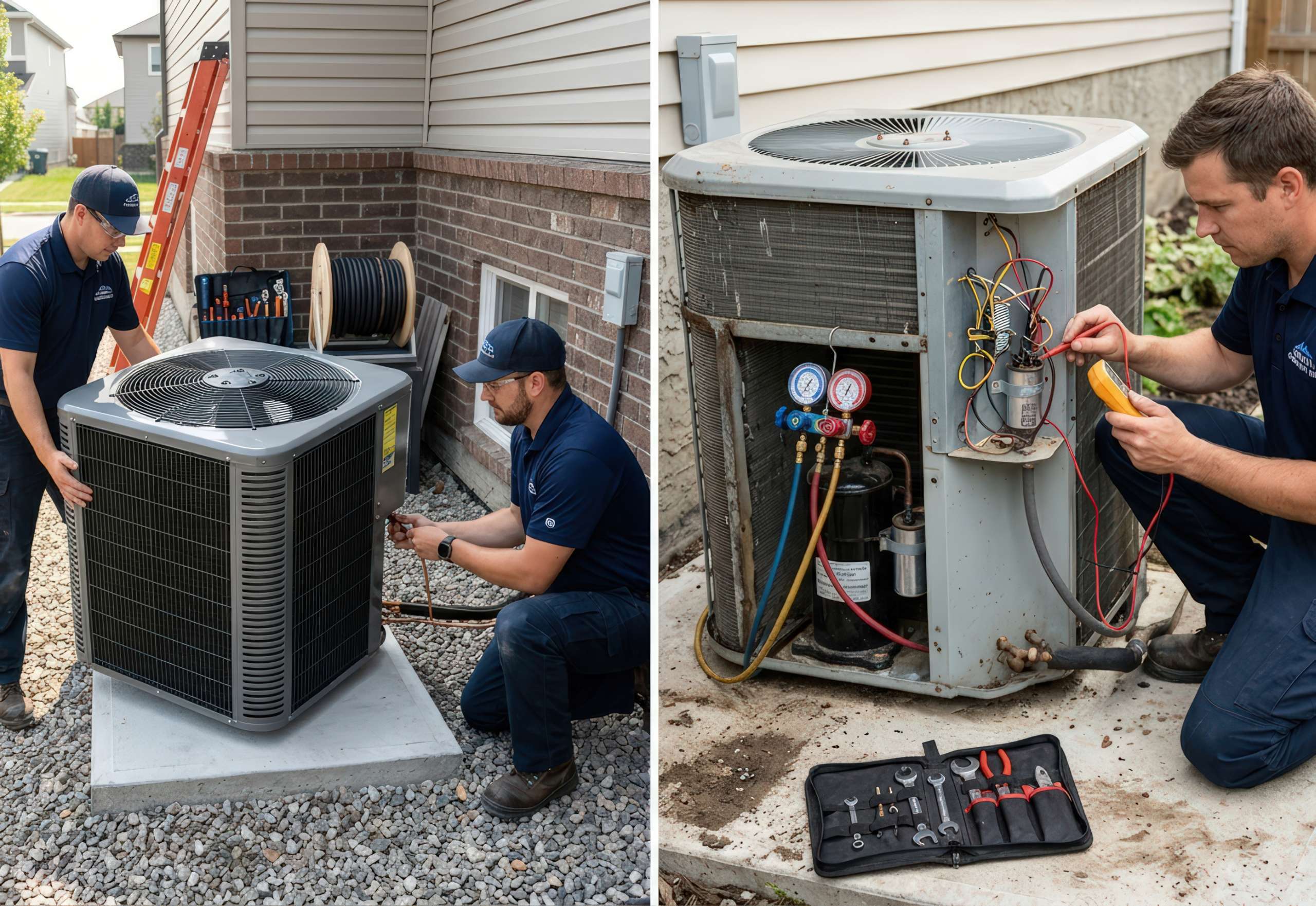
Frequent inspections of HVAC equipment can help save expensive repair bills, but they can also help you identify when equipment needs upgrading.
The following are surefire signs that it’s time to replace your AC unit:
1. Your AC System is 10–15 Years Old
Age isn’t everything with AC units — usage counts too. In hot, humid climates, extra usage can shave years off an AC unit’s life.
In Calgary, however, where homes generally only use AC from April to September (and even then, only occasionally), the stress on air conditioners is much lower. This tends to extend the life of AC units. Read more about how long an air conditioner should last.
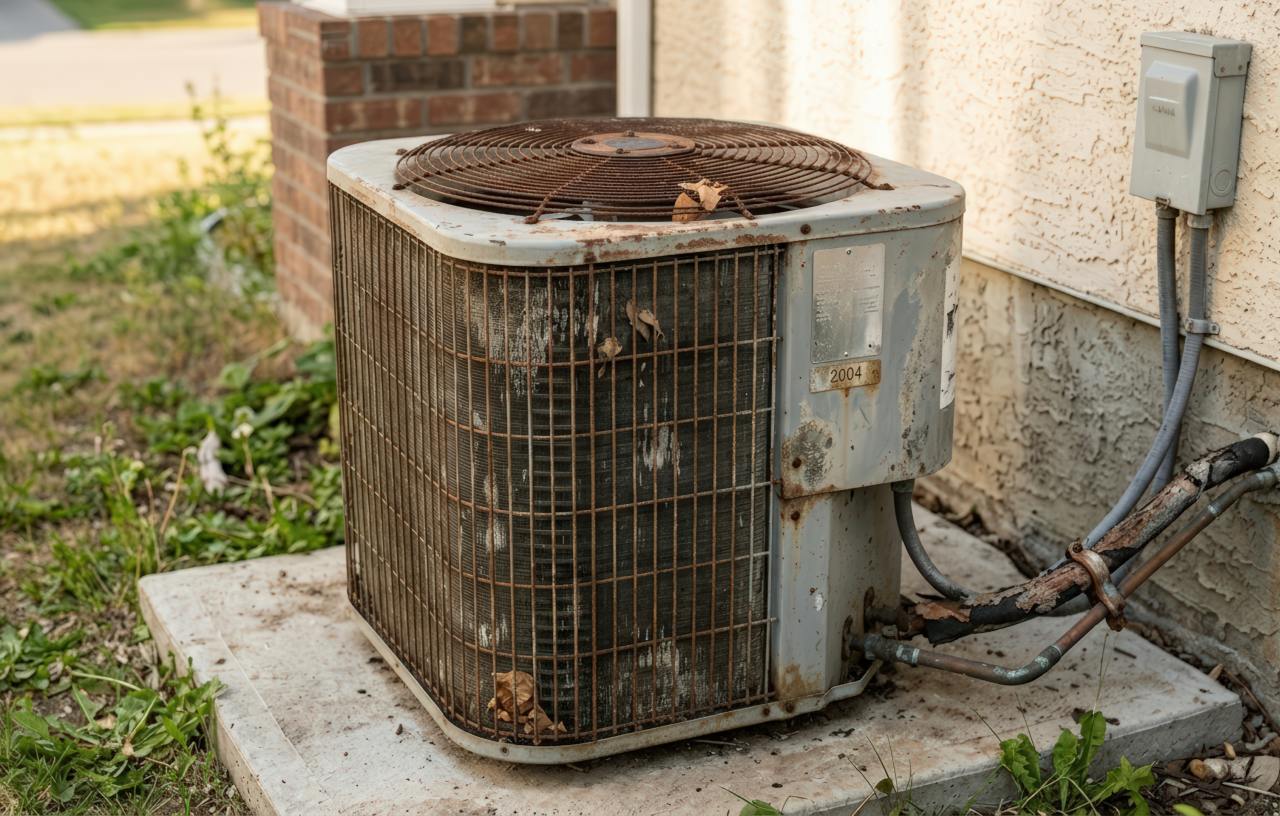
However, if you’re experiencing regular AC issues and your unit is over 10 years old with mounting air conditioning repair costs, it’s generally time to replace it.
2. Your Utility Bills Have Skyrocketed
Unexplained rises in utility costs should always be investigated. Few Calgary homeowners can afford to throw extra money at already-high utility bills without a good reason.
You’ll need to distinguish between:
- Normal rises in electric bills during especially hot periods, and
- Unexplained rises that could be due to AC efficiency issues.

By itself, high utility bills may not be reason enough to upgrade your unit, but if your air conditioner is also old and repair bills are mounting up, it’s likely time to replace your AC unit.
3. Repair Costs are Over Half the Replacement Cost
Say a new AC unit in Calgary costs around $6,000 while repairs to an existing 10-year-old unit will run $3,000. In that case, it makes sense to replace the AC unit rather than repair it.
Generally, if AC repair costs will exceed 50% of the price of a new unit, it’s worth seriously considering a replacement.
By investing a little extra in a new AC unit, you can benefit from the extra efficiency of upgrading to a modern two-stage or variable-speed air conditioner.
4. Repairs Are Required Multiple Times Per Year
If you’re forking out for repairs every year — or even multiple times per year — it’s time to cut your losses and replace your AC unit.
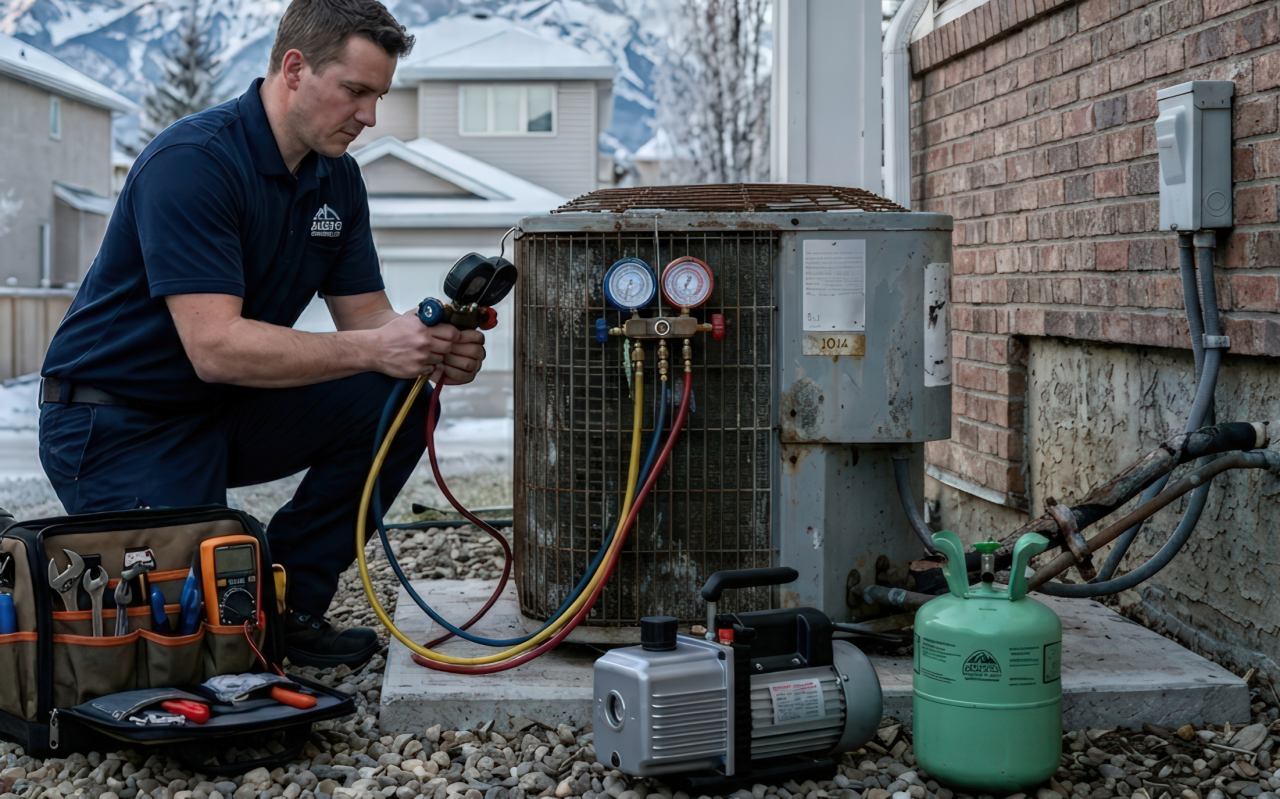
If repairs seem almost non-stop, your unit is likely old, faulty, or the wrong size for your home. Either way, if it’s long out of warranty, it’s time to consider an upgrade that will pay for itself every year with lower energy and repair bills.
5. Moisture Buildup or Humidity Problems in the Home
In Calgary homes, dry air is usually more of a problem than humid air.
Running the air conditioning can compound a dry air problem, as the evaporator coil removes moist, warm indoor air during the standard cooling cycle.
So, if you’re experiencing moisture buildup inside the unit, indoor humidity problems, fogged windows, or mildew and mold growth, something’s definitely wrong.
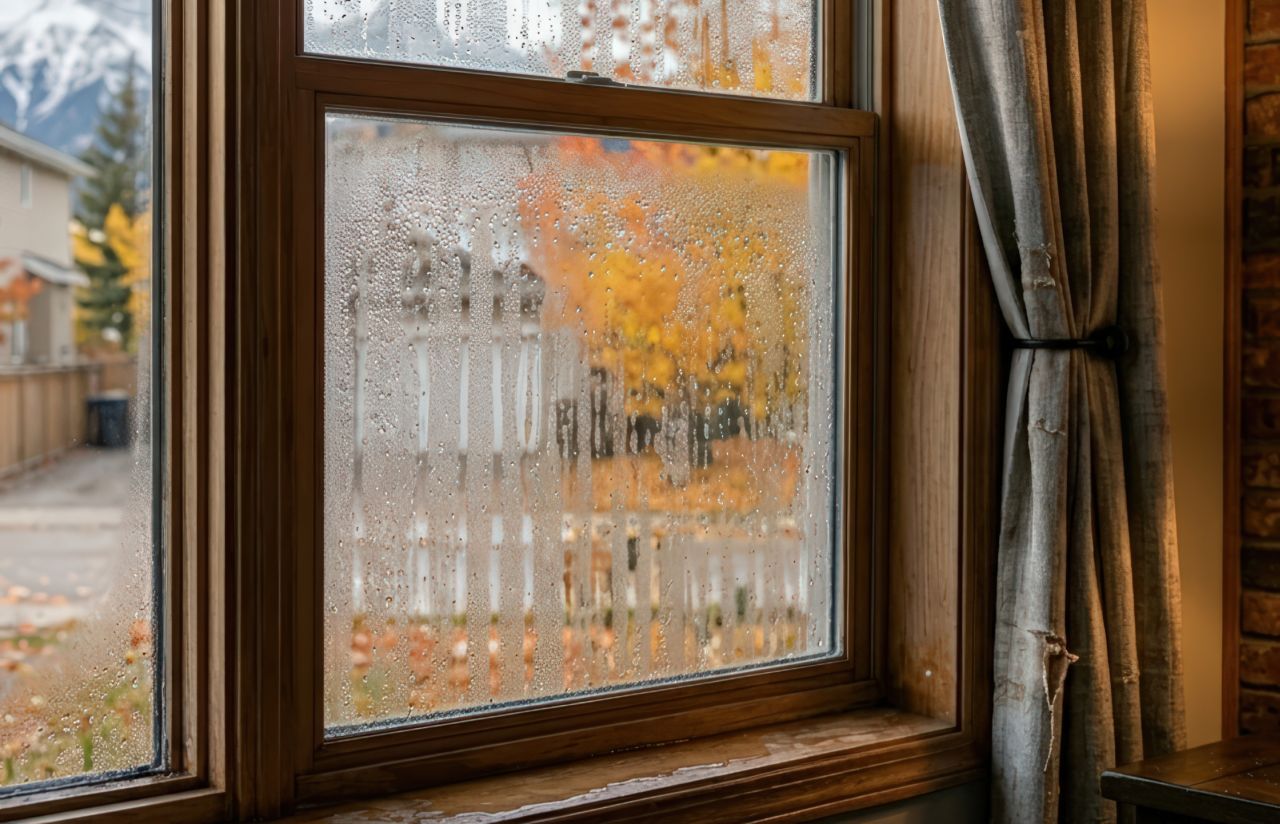
If more than an odd drop of water is leaking from a unit, you might have a problem with the evaporator coil. The fix may be relatively simple, like coil cleaning during an AC maintenance visit, or something more complex. You should replace an aging, inefficient system if repair bills are going to be high.
6. Your Home Isn’t Getting Cold Enough
If your AC is blowing warm air or your home isn’t getting cooled enough, it could be due to many things.
However, if expensive AC repairs are likely — due to a broken compressor or refrigerant issues — it may be best to replace an aging unit rather than throwing good money after bad.
You’ll need a professional AC assessment from one of our HVAC pros so that we can advise you whether to repair or replace your AC.
7. Loud Noises or Strange Odours Coming From the Unit
Loud noises and strange odours are two obvious signs that something’s wrong with your AC unit. Air conditioning should hum along quietly and not emit much of a smell at all.
Strange sounds (like bangs, clangs, or whistling) or smells (like musty or burning odours) don’t necessarily mean you need to replace the unit, but the issue should be investigated by an HVAC pro.
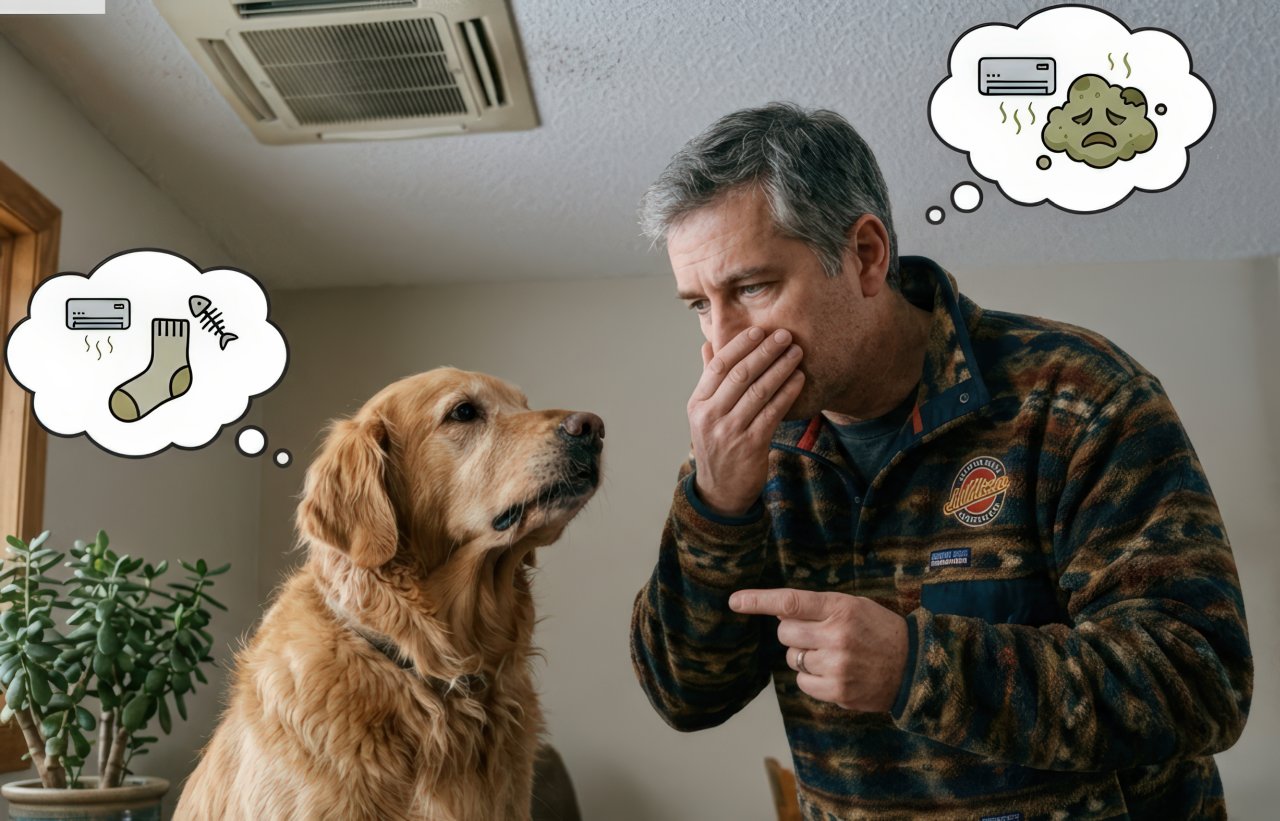
The strange sounds or smells could have a simple explanation. Our pros will provide an honest opinion about the problem and the fix — whether that’s AC repairs or replacement.
8. Your AC Still Uses R-22 Refrigerant
AC systems use refrigerant gas to cool the air inside a home. R-22 refrigerant (Freon) was the recommended refrigerant before 2010 but was phased out across North America due to environmental concerns.
Even the main replacement, R-410A, which became the industry standard, is now being phased out.
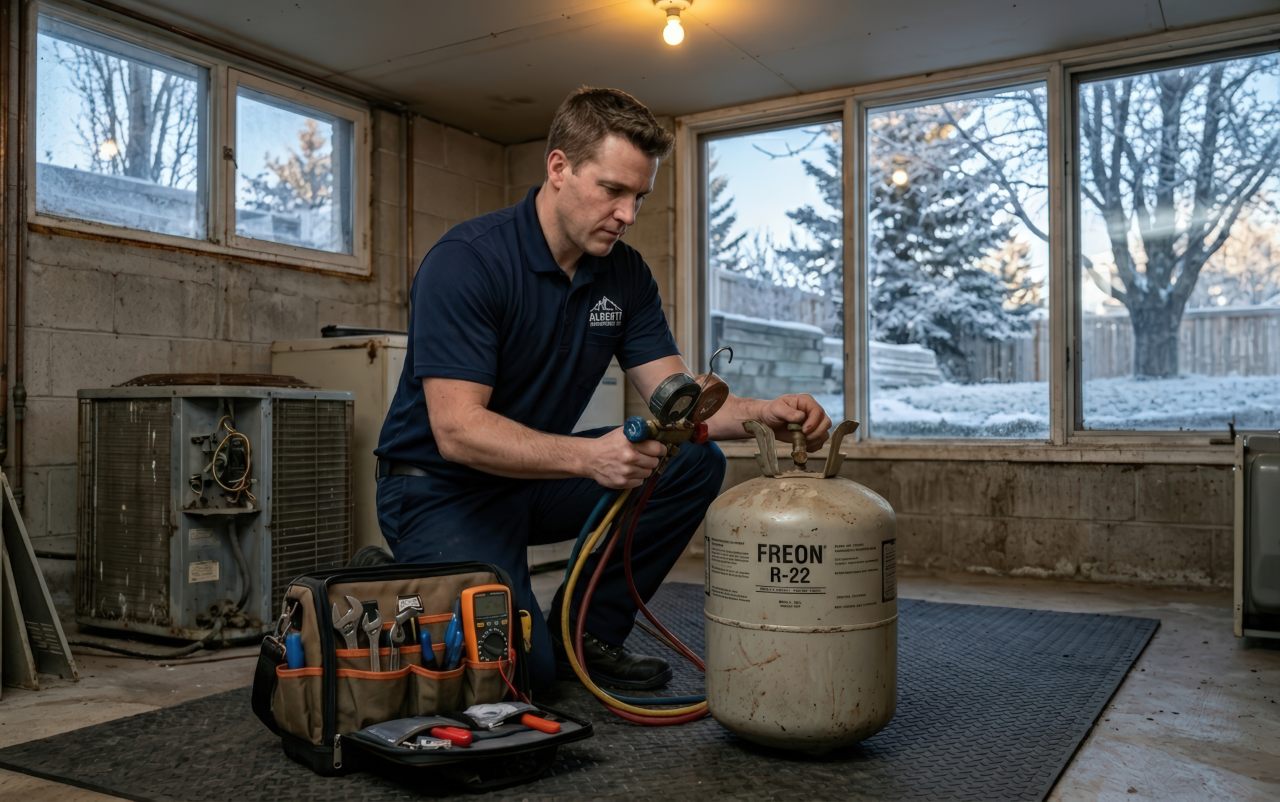
For a unit that uses current recommended refrigerants in 2026, you may need to replace your outdated air conditioner. Ask your supplier for “A2L compliant” models, which use refrigerants like R-454B and R-32, with a much lower Global Warming Potential (GWP) — the new Canadian standard.
FAQs
How Do You Know When to Repair Rather Than Replace AC?
There is a “tipping point” where it becomes more sensible and cost-effective to invest in a new AC unit rather than continue repairing the old one. Replacement saves on:
- Ongoing repair bills.
- Monthly energy costs.
- Maintenance expenses.
Replacement also creates fewer headaches for households than constantly repairing aging units.
With the $5,000 Rule, you multiply the age of the unit by the cost of the repair. If the result exceeds $5,000, you should replace it. For example, a 12-year-old unit needing a $600 repair: 12 × $600 = $7,200. Since $7,200 exceeds $5,000, replacement is the more cost-effective long-term move.
What Are the Main Benefits of Upgrading Your AC?
The potential benefits of upgrading your AC unit include:
- Improved home comfort levels from better cooling performance.
- More efficient operation and less wasted energy.
- More manageable utility bills.
- Lower AC repair and maintenance costs.
- Greater control over indoor climate (compatibility with smart thermostats).
- Reduced noise levels — most modern AC units run almost silently.
- Compliance with new AC refrigerant standards.
Do I Need a New AC If My Unit’s Frozen Up?
Not necessarily. A frozen air conditioner is often caused by impeded airflow — frequently due to a dirty air filter or blocked vents.
What to do first: Turn the AC off and set the fan to ON to help melt the ice. Change your filter and check that all registers are open. If the unit freezes again after thawing, it likely indicates a refrigerant leak or a failing evaporator coil. At that point, have a technician evaluate whether a repair or replacement is more cost-effective.
My Air Conditioner Isn’t Broken. Why Replace It?
If your AC is older than 10–12 years, it likely suffers from hidden efficiency loss. As parts age, performance degrades, leading to rising energy bills and uneven cooling. Upgrading proactively allows you to choose a high-efficiency system on your own timeline, saving you from the stress and inflated costs of an emergency mid-summer breakdown.
My AC Is Not Starting. Do I Need a Replacement?
Not necessarily. Check your thermostat, circuit breaker, and air filter first. If your air conditioner isn’t kicking on, it could be due to simple electrical issues or a blown capacitor. However, if your unit is over 15 years old and the compressor has failed, replacement is recommended.
Repair or Replace Your AC Unit? Find Out Today.
Don’t ignore AC problems — the condition of a unit can deteriorate until repairs are no longer cost-effective and replacement becomes unavoidable.
Not sure whether it’s best to repair or replace your AC unit?
The team of SAIT-certified HVAC professionals at Alberta Mountain Air has been helping Calgary homeowners make the right heating, cooling, and indoor air quality decisions for over two decades. Contact us today — we’ll give you an honest assessment and a free quote.